Storks in Sussex
Following footpaths for glimpses of some of the wildlife at Knepp Wildland, Sussex.
At the start of August I finally got to visit Knepp in Sussex. If you're not familiar with it, I'd recommend reading Isabella Tree's Wilding for the full story on how her family transformed a failing farm into a leading conservation project.
I've read about it's radical approach to land management and the positive impact on wildlife, but the fact it's only eight miles from where I grew up has made its pull even more powerful. I've wanted to visit for years but it's not been easy to plan such trips for a while. Unable to commit to a full stay, we just dropped by this time to follow a few footpaths and catch a glimpse of some of the wildlife.
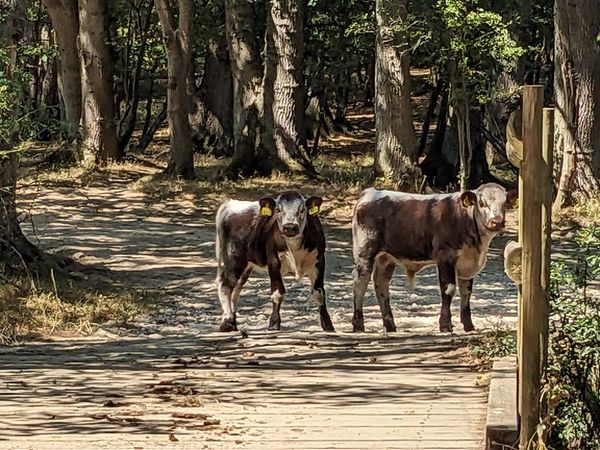
Since it was 34 degrees or more, we stuck to the shade, along with the free-roaming cattle and ponies. From the tree platforms we could look out over green canopies, while at ground level it was a lot of hard-baked clay and crisp grasses.
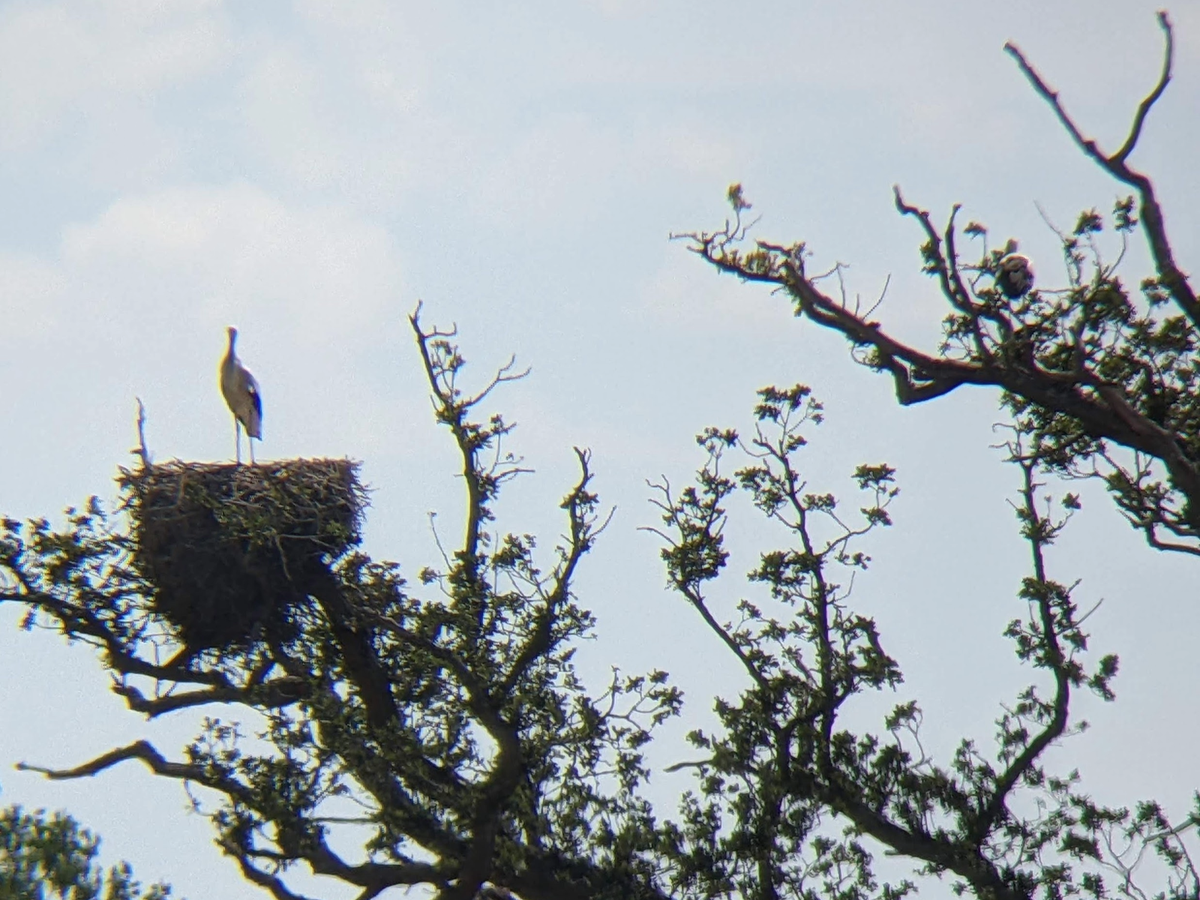
A highlight was definitely seeing the famous white storks. Our first encounter was watching a pair in an oak tree, enduring despite being exposed to the worst of the heatwave. I was struck by the scale of the birds; at over a metre tall they looked as though my four year old was casually stood on a branch in a bird outfit. As we rounded another corner of the footpath we saw a handful of them circling; paper decorations floating in the pale blue sky.
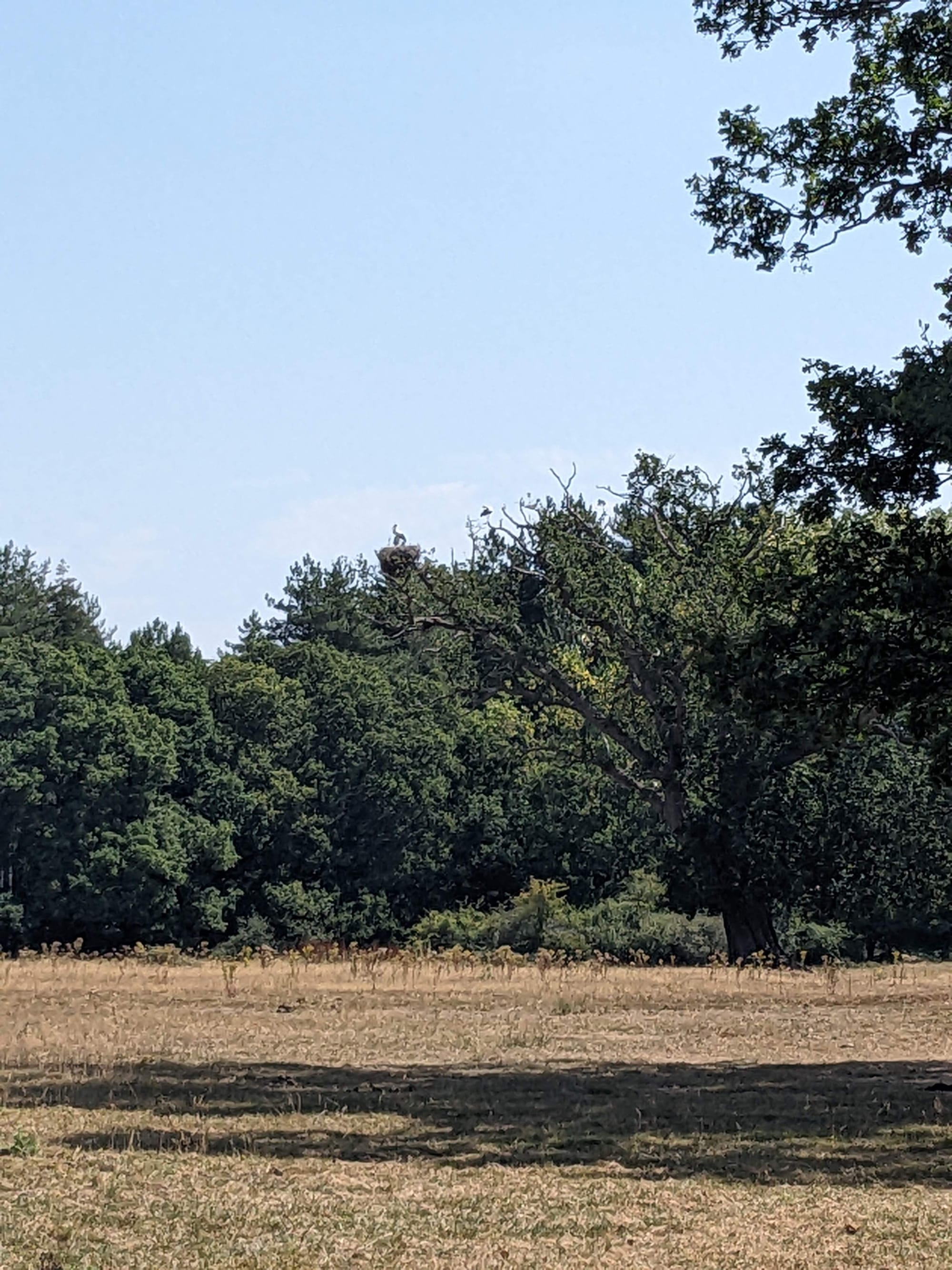
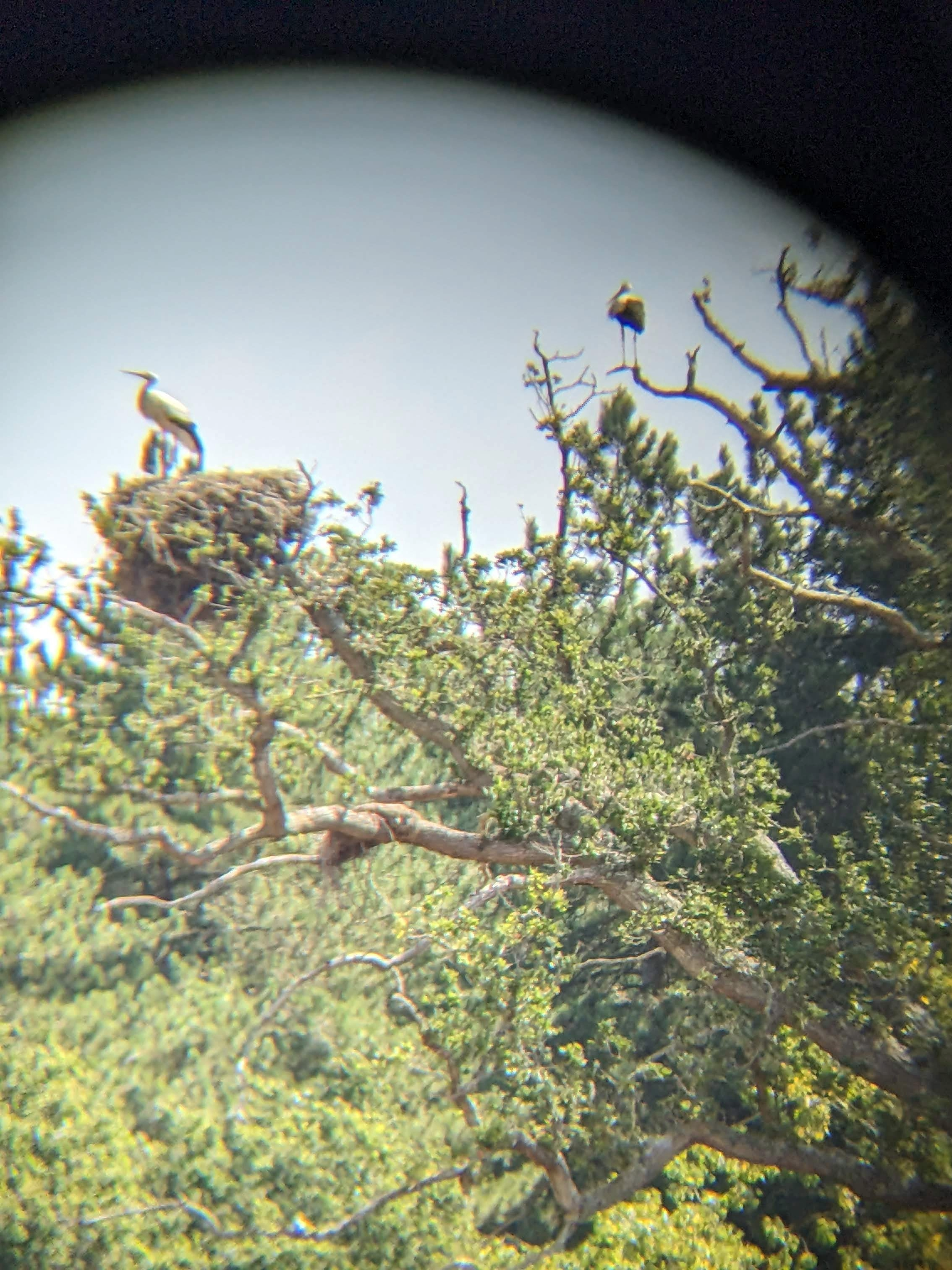
Left: Spot the storks Right: a ropey bit of phonescoping
There's been a lot of debate about whether the birds should be here, following a blog by Natural England back in May that questioned whether they are a historically native species. Anyone who wants to argue whether these birds should be (re)introduced to the landscape would have a hard time getting their words out while watching the displays we saw.