Hot mammal summer
Earlier in the year we witnessed the impossible shape of a mother weasel transporting a kit along the Sandstone Trail through Nettleford Wood. A fleet, furry sausage with a right angle, it was such an unusual sight it took a while to understand what we were seeing.
I don't know if I've been paying more attention to the quick brown shapes on the periphery of my vision since, or whether the soaring temperatures have increased opportunities to see mammals that would ordinarily be hiding from me.
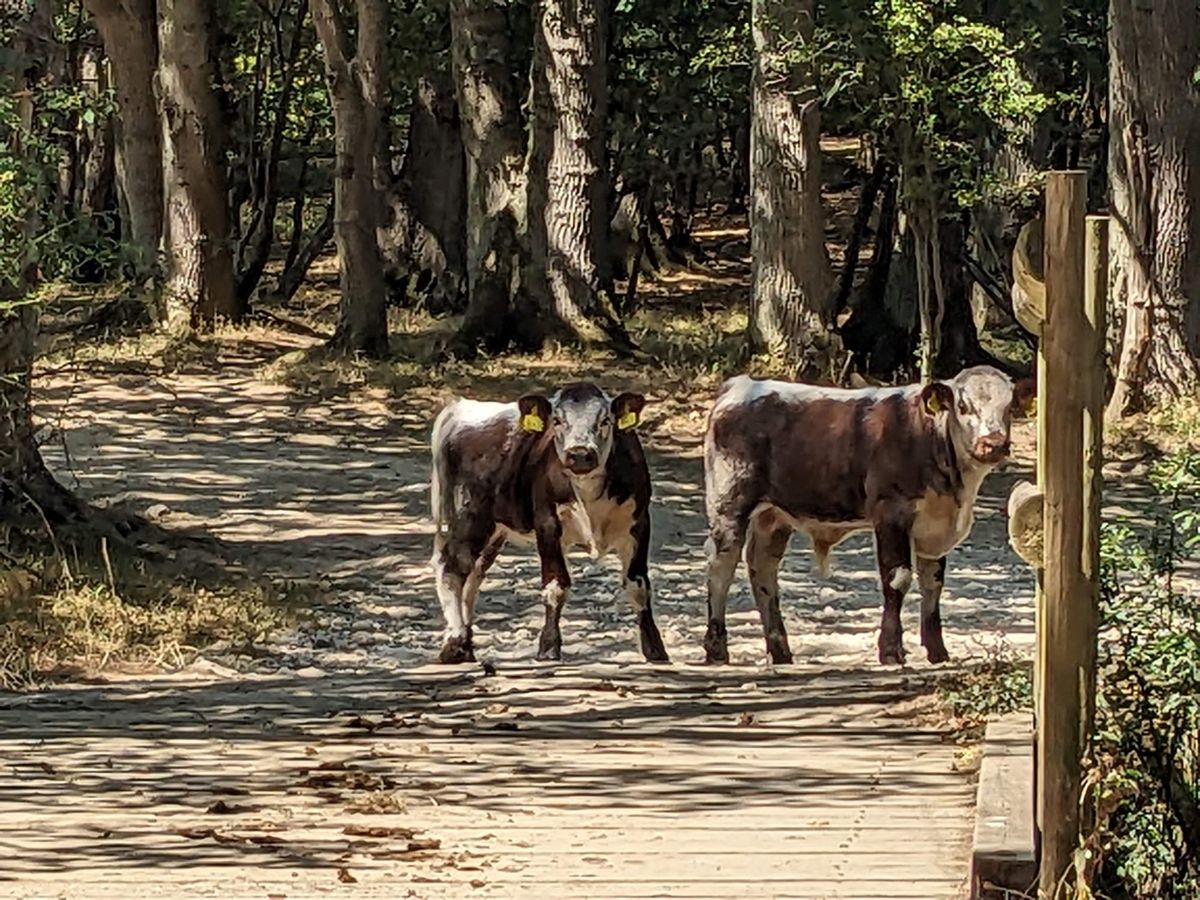
It's difficult to say whether the badgers, foxes, squirrels and hedgehogs lying on the roads, bodies crumpled by cruel impacts, were led to their deaths by drought. The same goes for the field vole and common shrew discovered decomposing in the middle of footpaths. Our former resident wood mouse died of shock, following discovery by the dog (who barked but otherwise didn't harm a hair on it), suggesting it was living at its limits. On our visit to the Knepp estate, mercury rising past 34 degrees, we took a leaf from the livestock's book and stayed beneath the trees as much as possible. A slow-moving rabbit loping away from a dreadfully dried out pond on a local dog walk particularly drew my sympathy this week.
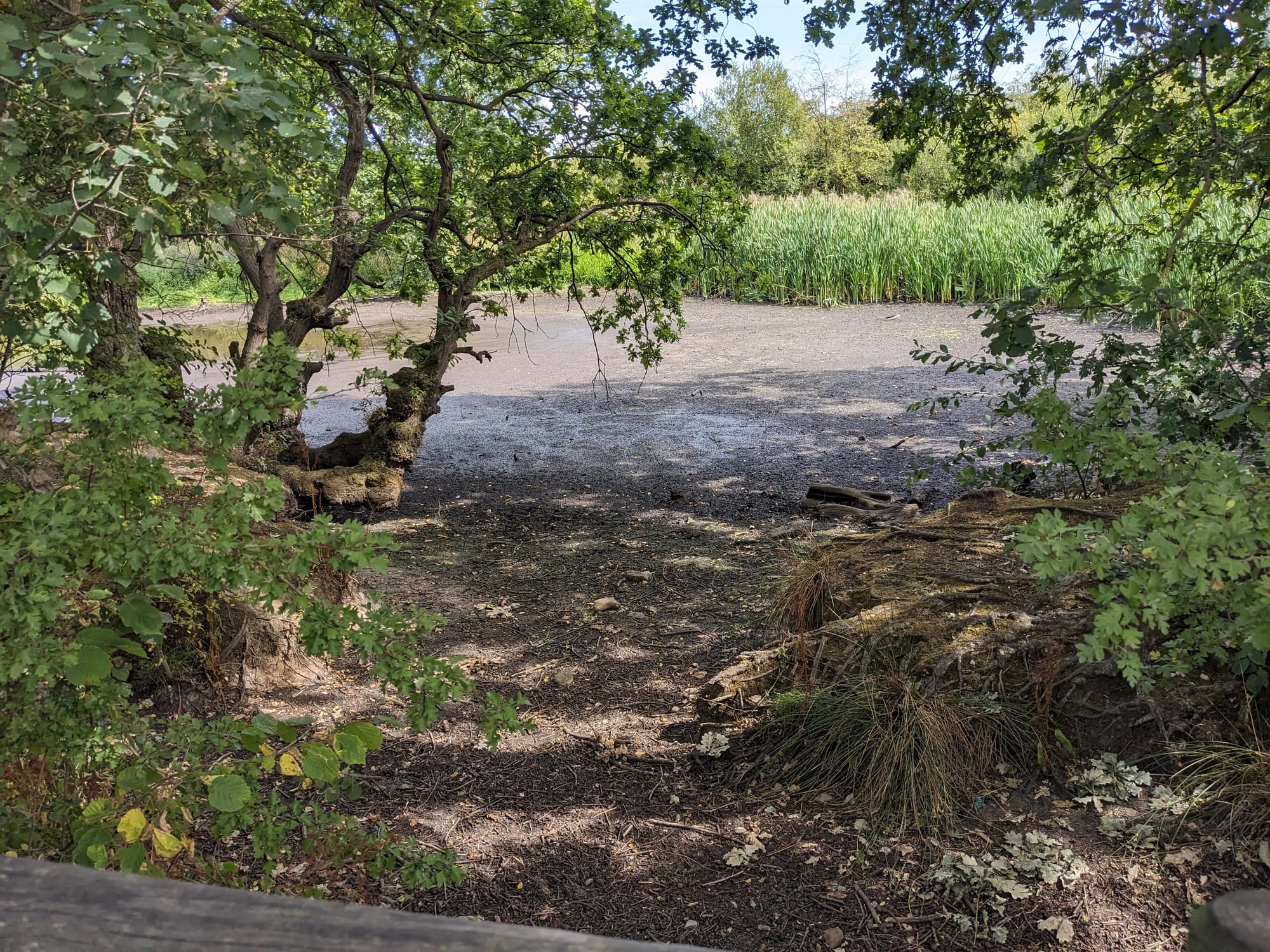
Natural water sources have disappeared and the ground has baked hard. Food sources are scarce as fruits have ripened early, while still relatively small, and insects have retreated underground away from the unprecedented heat. Wildfires have destroyed habitats while contractors continue to mindlessly grind grass stems into dust and lop limbs off trees.
Is it too late to reverse this trend in higher temperatures? Is there anything we can do to help? We have resolved to finally dig our long-planned pond this autumn, as soon as the ground has softened enough to submit to a spade. In the meantime we have been leaving water out and postponing pruning to provide much-needed shelter for our suffering garden wildlife.