Pedantic puffin reviews: The Very Hungry Caterpillar
What can a picture book beloved across generations teach us about entomology?
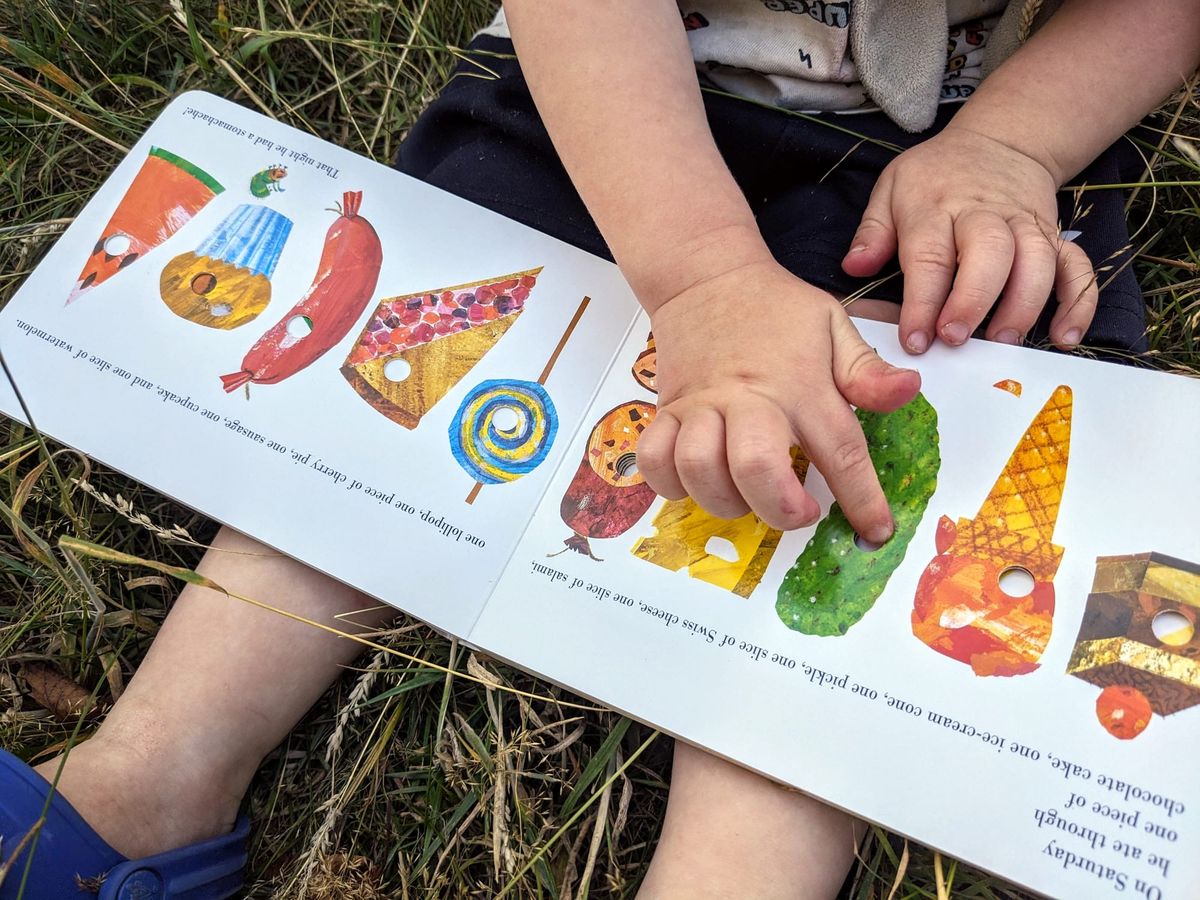
We've really enjoyed Butterfly Conservation's Big Butterfly Count (an annual 'citizen science' survey of butterfly numbers) over the last few weeks, so my inaugural review focuses on these interesting insects.
Eric Carle's The Very Hungry Caterpillar, first published in 1969, is a beloved book that's been passed down the generations. Bright colours, tasty treats, die cut pages you can poke tiny fingers through. What's not to love?!
While it's obviously not an accurate book for budding entomologists, it has still inspired a lot of scientific discussion. A cursory glance at the internet reveals a species ID blog post, a video that draws some interesting comparisons and a fun discussion on the iNaturalist forum. Butterfly Conservation have a page on unusual caterpillar eating habits in its honour. There's even an academic paper about the fictional character's appetite which concludes that it is in fact an Inordinately Hungry Caterpillar, eating around 48,000 times its 0.04 gram mass in just seven days.
Name that caterpillar
The FAQ on Carle's website describes his insect as 'very unusual', particularly regarding its pupation in a cocoon which is a common bone of contention among pedantic readers that we'll cover a little later.
You won’t find my caterpillar in any field guides - Eric Carle, author, illustrator, frequent answerer of caterpillar questions
Nevertheless, we'll start by trying to identify the Very Hungry Caterpillar (VHC hereafter). Although there are some visually strong candidates globally, especially the common awl of Southeast Asia, Eric Carle lived in New York, so we'll focus on US species.
There are some spectacular green caterpillars with red faces in the United States, including the rosy maple moth, imperial moth, greater oak dagger and hickory horned devil. Yes, moths have the best names but I hope you've spotted the problem here: they all turn into beautiful moths rather than beautiful butterflies.
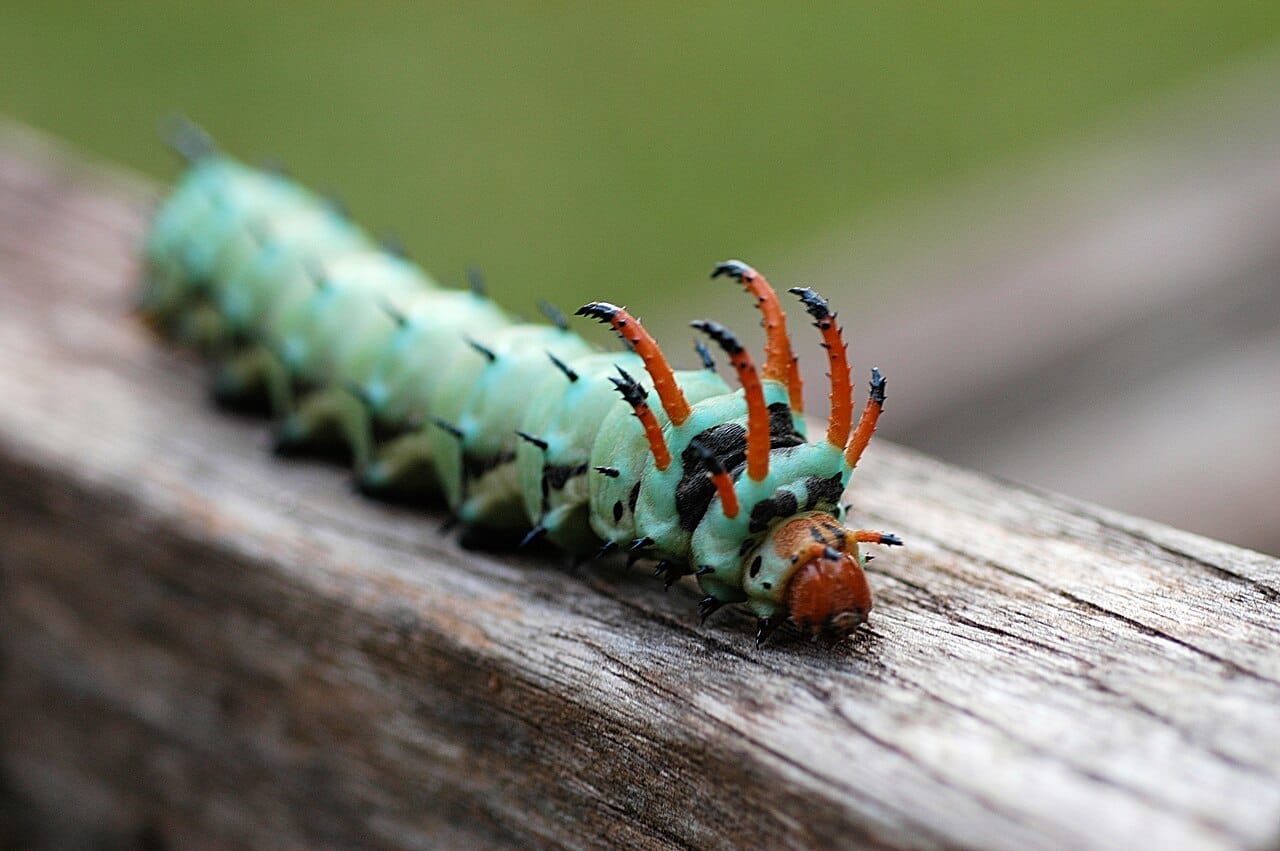
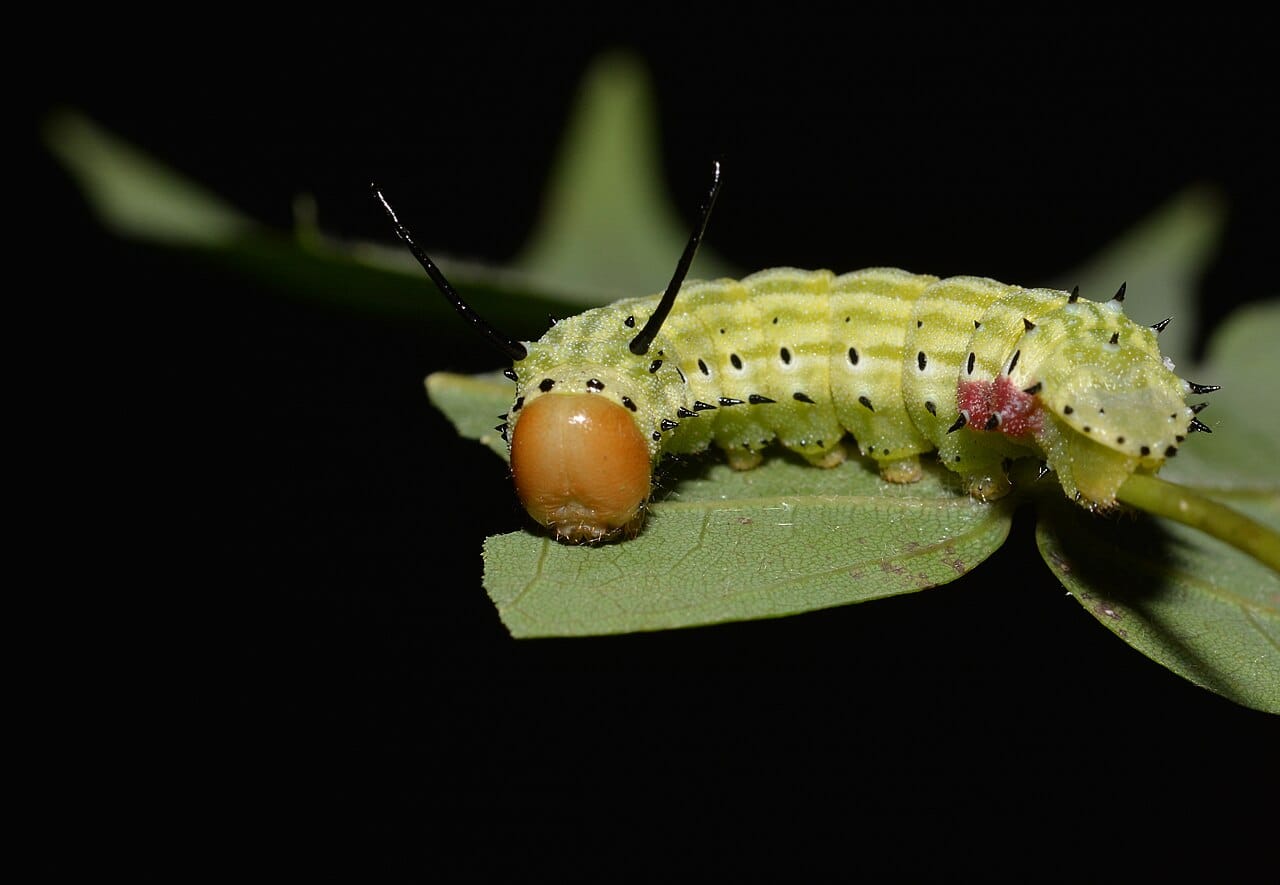
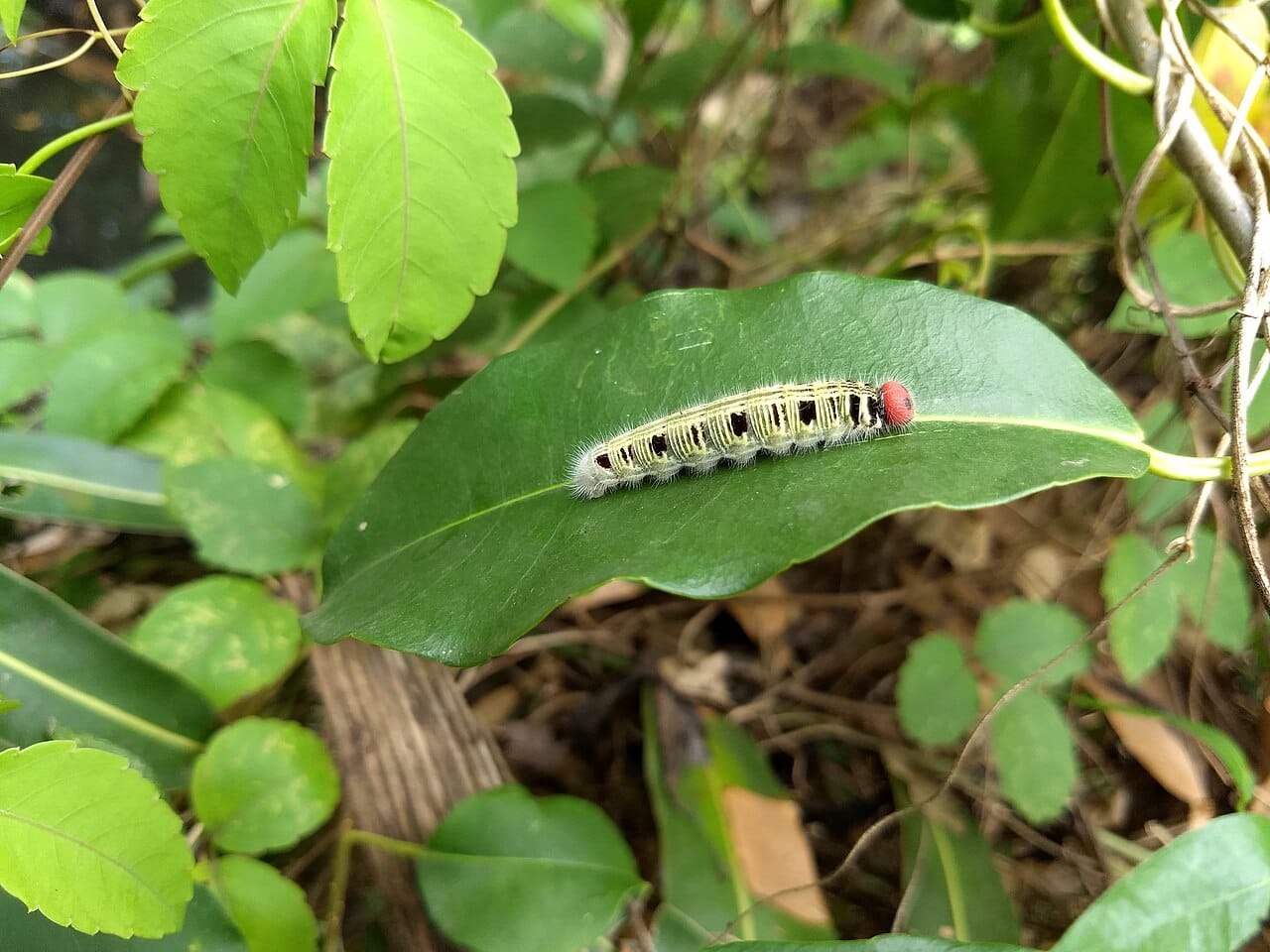
Strong candidates for the role of Very Hungry Caterpillar: Hickory horned devil Mcevan, CC BY-SA 3.0 | rosy maple moth Andy Reago & Chrissy McClarren, CC BY 2.0 | common awl Renjusplace, CC BY-SA 4.0 via Wikimedia Commons
The strongest theory I've found suggests VHC is a Cramer’s silver-drop skipper (Epargyreus clarus). It's also known as a silver-spotted skipper in the US but this can lead to confusion with the European species Hesperia comma so I'll continue with its Latin name.
The eggs of E. clarus are green with a red top, and laid singly on the underside or stalk of a leaf belonging to a plant in the pea family. Most often the chosen plant is also a food source, but there are exceptions including the wonderfully named least snout-bean (Rhynchosia minima). Carle's depiction isn't too far off, it could just use some accurate colour, vines and improved ovipositing (that's egg placement).
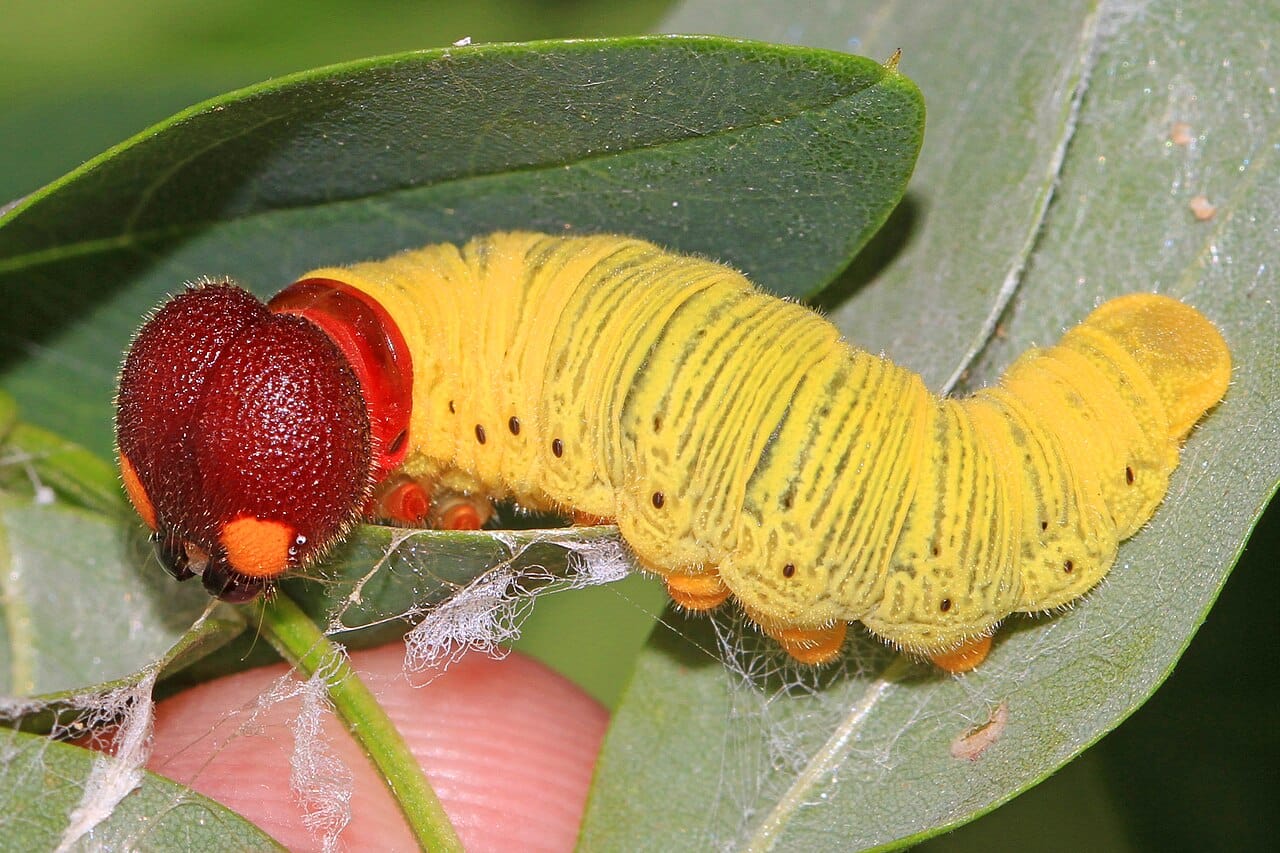
Epargyreus clarus larvae are yellow-green with red-brown heads that develop two orange marks or 'eyespots'. This fits quite well with Carle's illustration but the protrusions on the VHC's head need some further investigation. They most closely resemble the osmeterium unique to swallowtail butterfly caterpillars. This special defensive organ, located just after the head on the thorax, raises up and emits a foul smell when the caterpillar feels threatened. E. clarus meanwhile regurgitate a green chemical to deter predators and fling their frass (excrement) up to 38 times their body length using an anal comb to put wasps and assassin bugs off their scent. Note, this detail would dramatically alter any scratch 'n' sniff edition of the VHC.
There's been a lot of speculation around the VHC's diet so I'll keep this brief. E. clarus are strict folivores (leaf-eaters), which is obviously a lot less visually appealing to pre-school humans than eating a load of fruit and processed food. Some of the nice green leaves they favour do at least have entertaining common names, including partridge pea (Chamaecrista fasciculata), American hog-peanut (Amphicarpaea bracteata), Atlantic pigeon-wings (Clitoria mariana) and - cover the children's ears - bastard indigobush (Amorpha fruticosa).
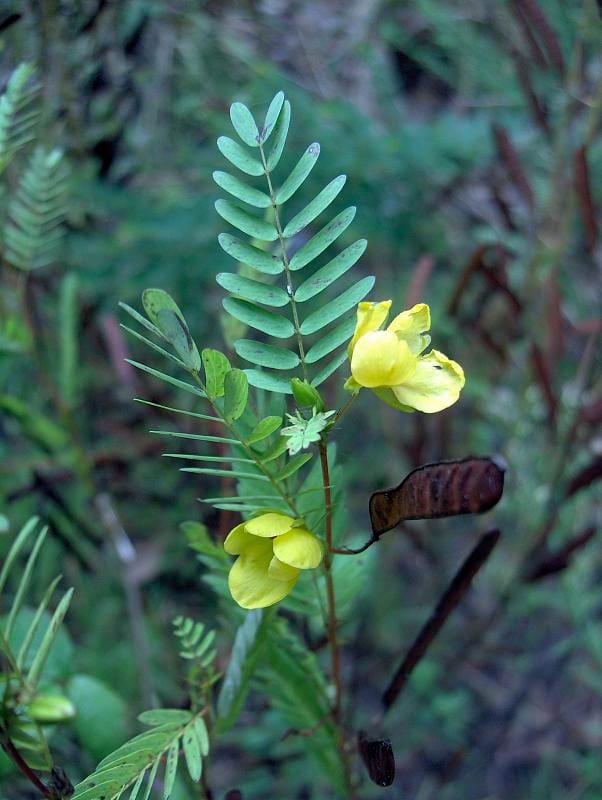
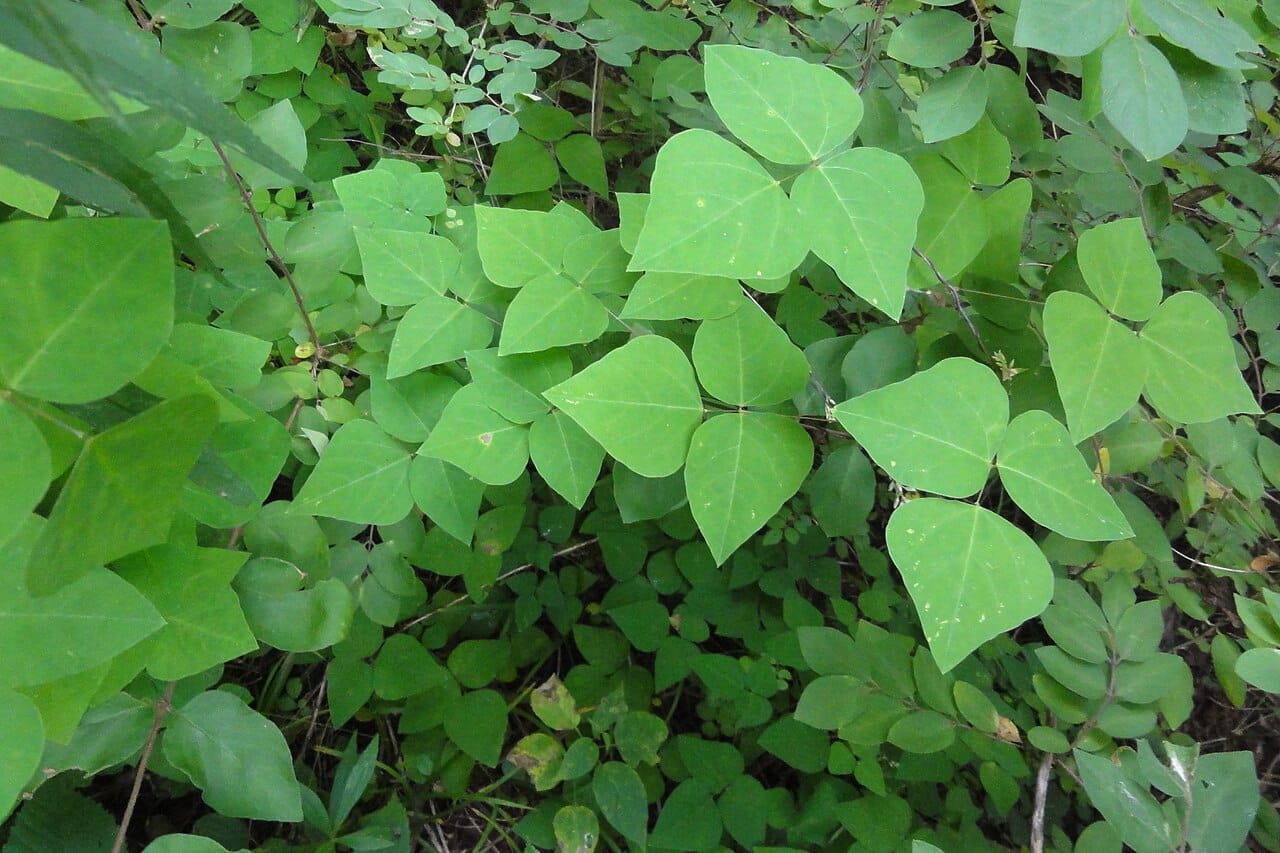
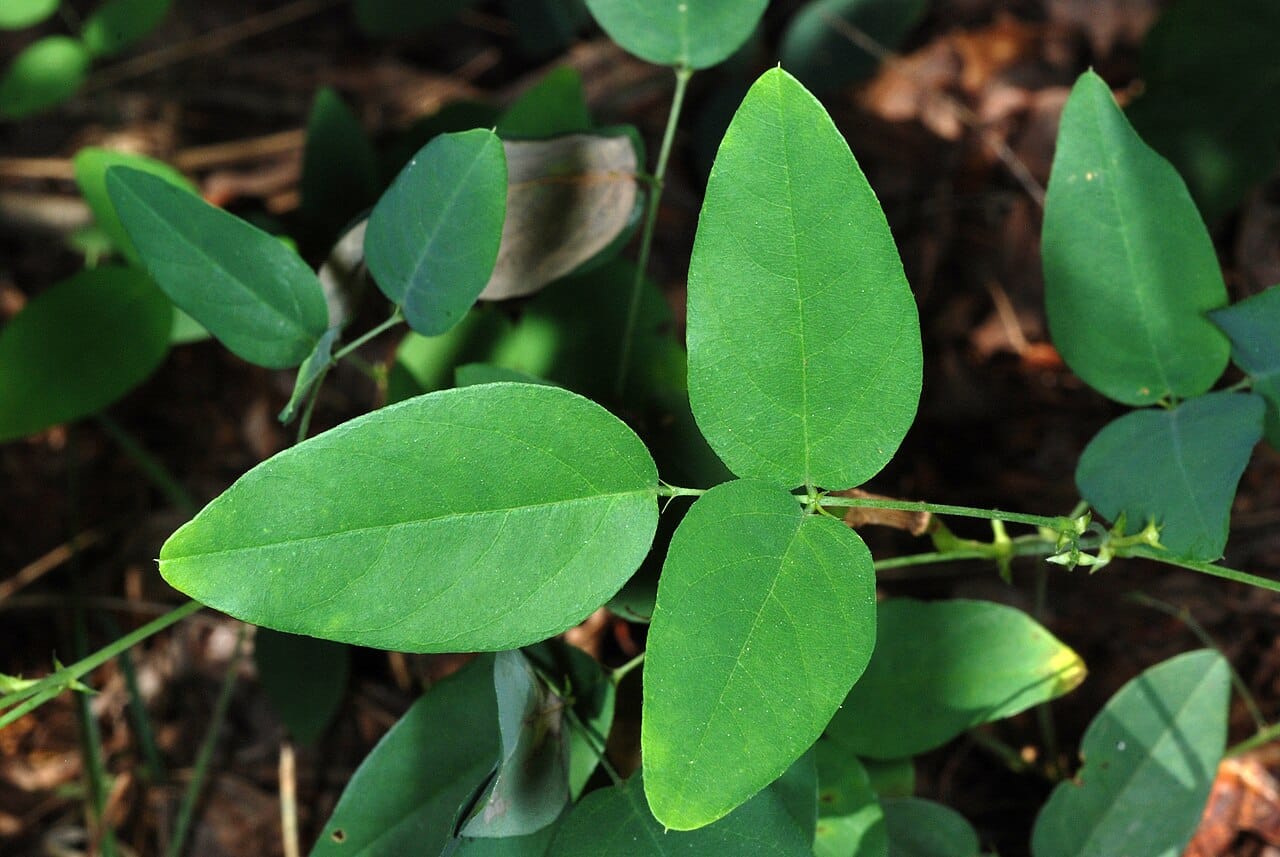
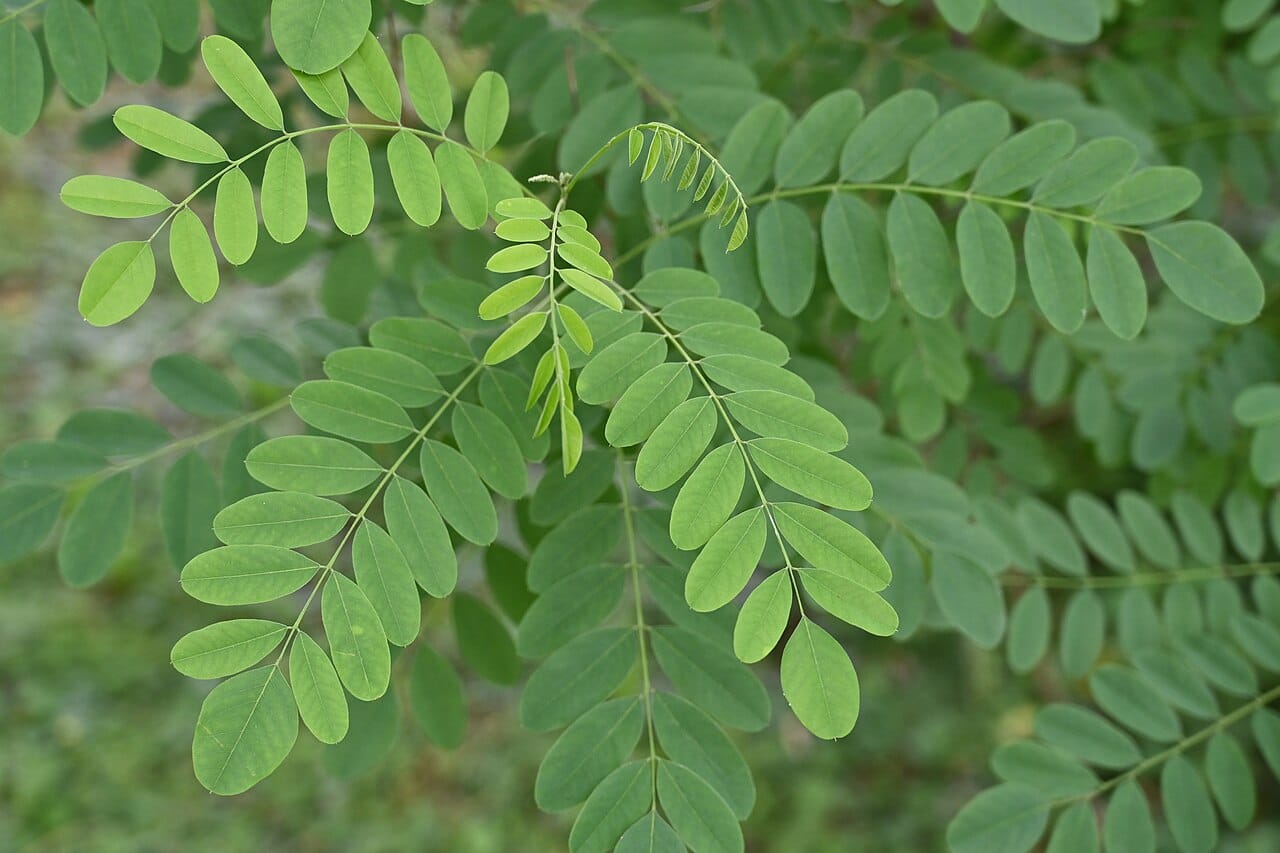
Nice green leaves favoured by hungry Epargyreus clarus caterpillars include: partridge pea homeredwardprice, CC BY 2.0 | American hog peanut Cbaile19, CC0 | Atlantic pigeon-wings DouglasGoldman, CC BY-SA 4.0 | bastard indigobush Agnieszka Kwiecień, Nova, CC BY-SA 4.0, via Wikimedia Commons
Wrapped up in details
As previously mentioned, pupae, cocoons and chrysalises are the major sticking point for critics of the VHC. A pupa is a distinct life stage in an insect where metamorphosis takes place; a mind-boggling transformation from larval to adult form. Both moth and butterfly pupae are also known as chrysalises (or chrysalides in the US) but cocoons are mostly made by moth larvae. They spin a silken protective barrier around themselves before moulting to reveal their pupal form. Some butterfly caterpillars will also protect themselves in this final transformative stage by burrowing underground or constructing external shelters before shedding their last caterpillar skin. It's also worth noting an exception: Apollo butterflies (Parnassius) construct silken structures varying from loose nets to well-formed cocoons.
A butterfly transforms into a chrysalis or pupa not a cocoon (that would be what some moths make). Our daughter has been correcting everyone. - Carrie, frustrated homeschooling mom with a biology degree.
Our friend the Epargyreus clarus caterpillar uses a leaf tent to protect itself throughout its growth. It will munch an incision in a leaf, fold the flap over itself and tether it using threads of silk. The caterpillar only leaves this shelter on cloudy days or at night to forage or build a bigger shelter. So for this species, Carle's warm sun would be better hidden behind some clouds or replaced with the moon.
Larger E. clarus larvae will bind multiple leaves together to form a bivouac. Four distinct shelter types have been identified and in the final one, the larva will transform into a brown striped chrysalis. It remains here over winter (quite a bit more than two weeks), falling to the ground with the leaf litter, before flexing to split open the chrysalis in spring (not nibble a hole in since butterflies don't have teeth).
Winging it
When the VHC does triumphantly emerge as a beautiful butterfly, it's not at all clear which of the US's 750 species he's transformed into. One blogger points out the aberration of the lower wings appearing larger than the upper wings, and combined with the overall asymmetry, proposes the butterfly is a mutation, possibly of the European peacock (Aglais io). While it comes close with its rainbow hues and four distinct eyespots, the species was only formally added to the New York butterfly list in 1997 so I have to reject the theory.
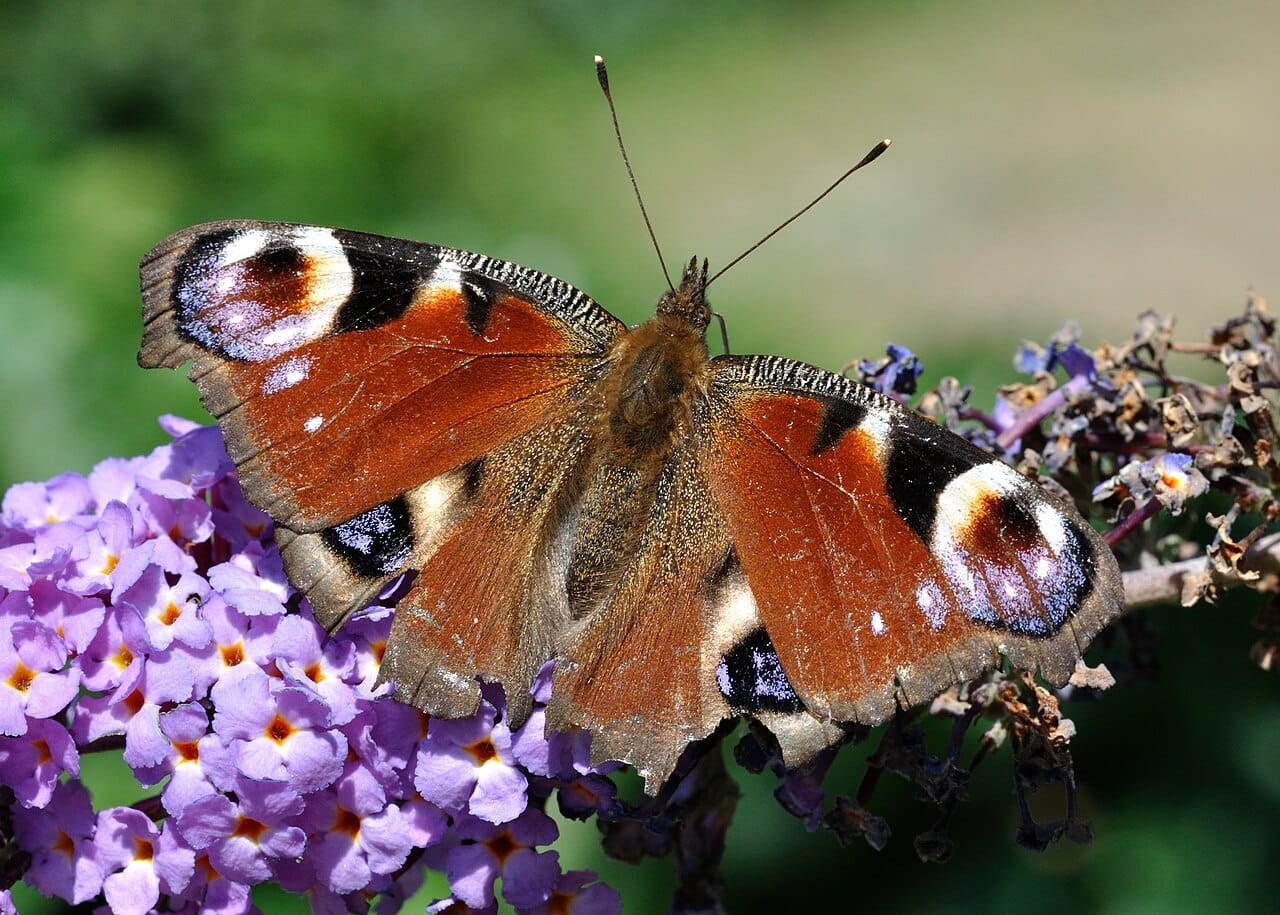
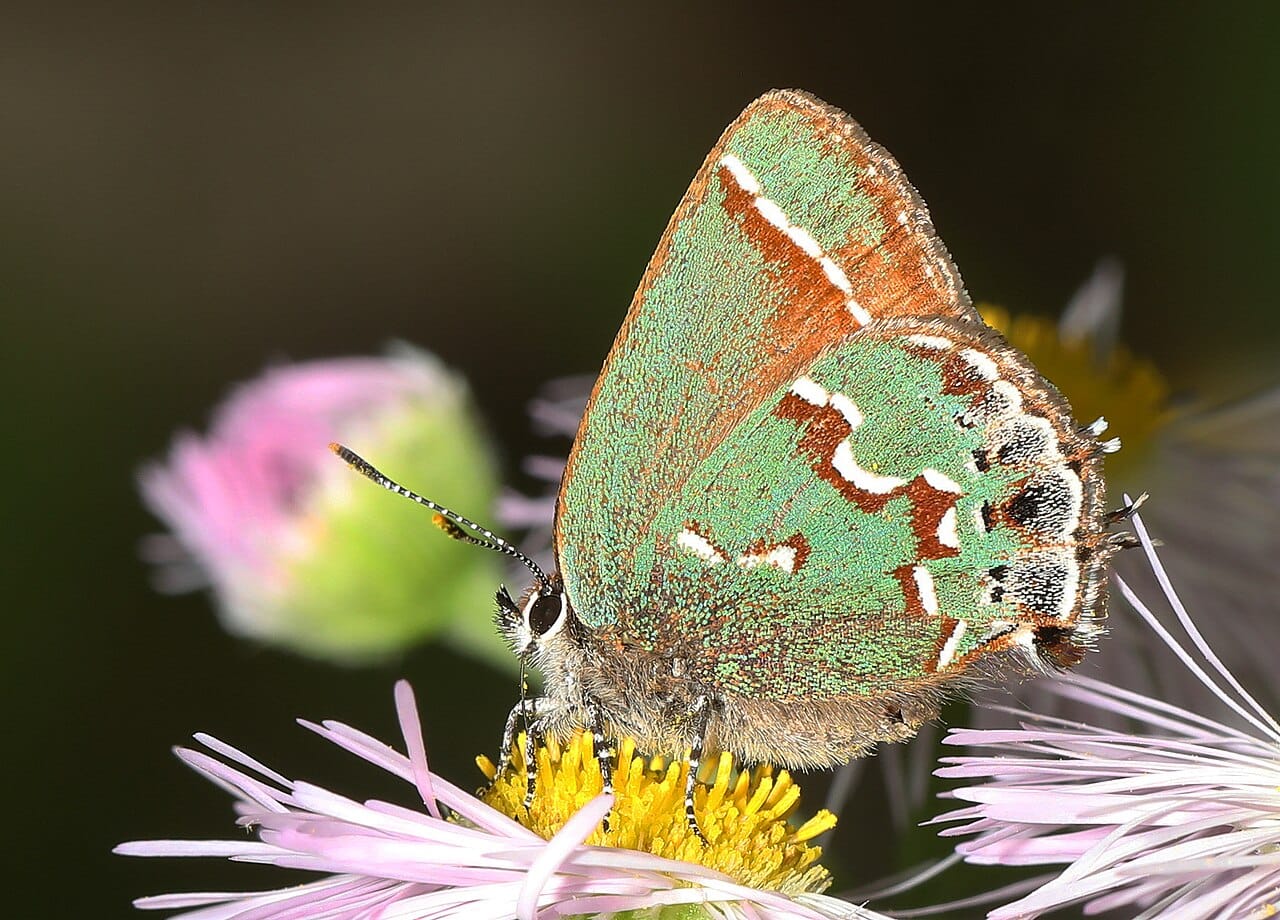
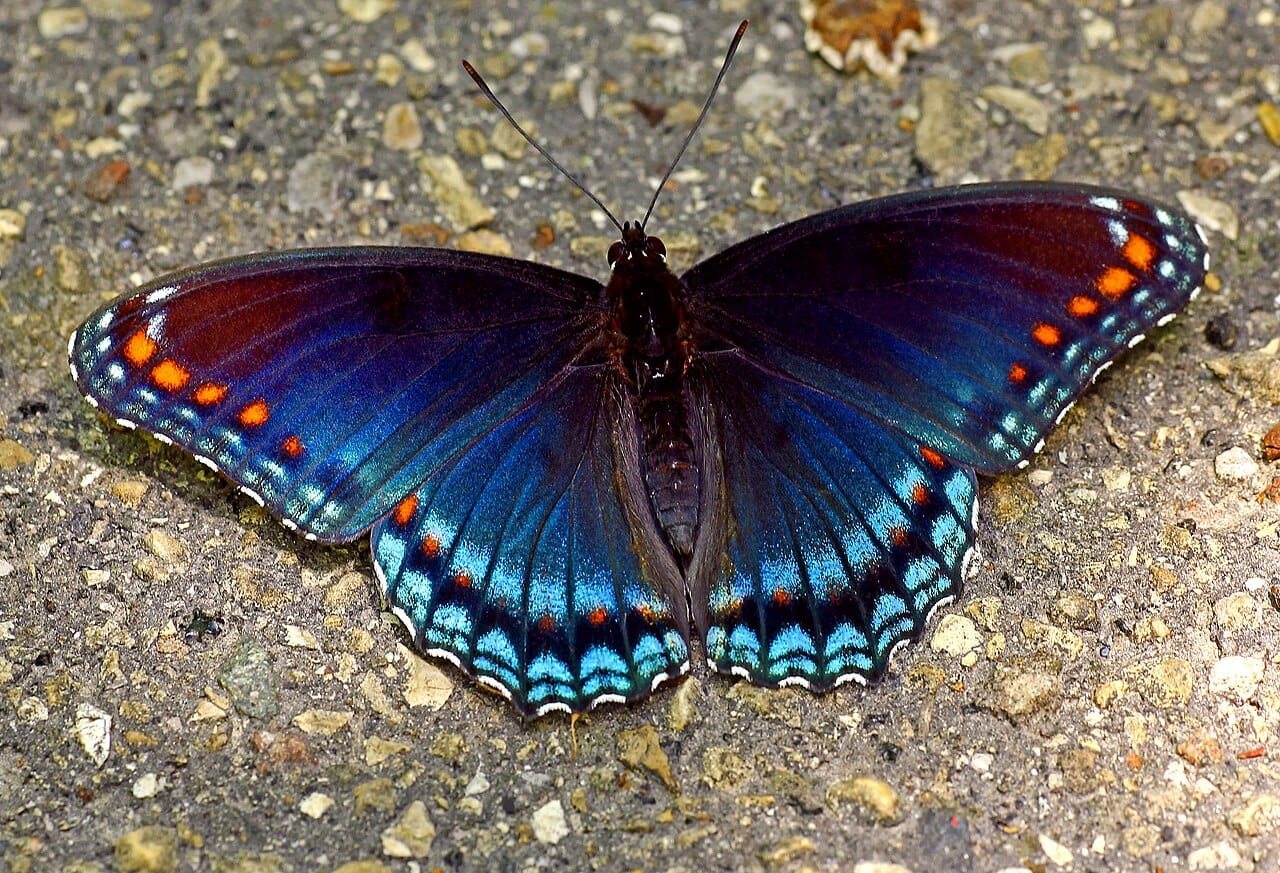
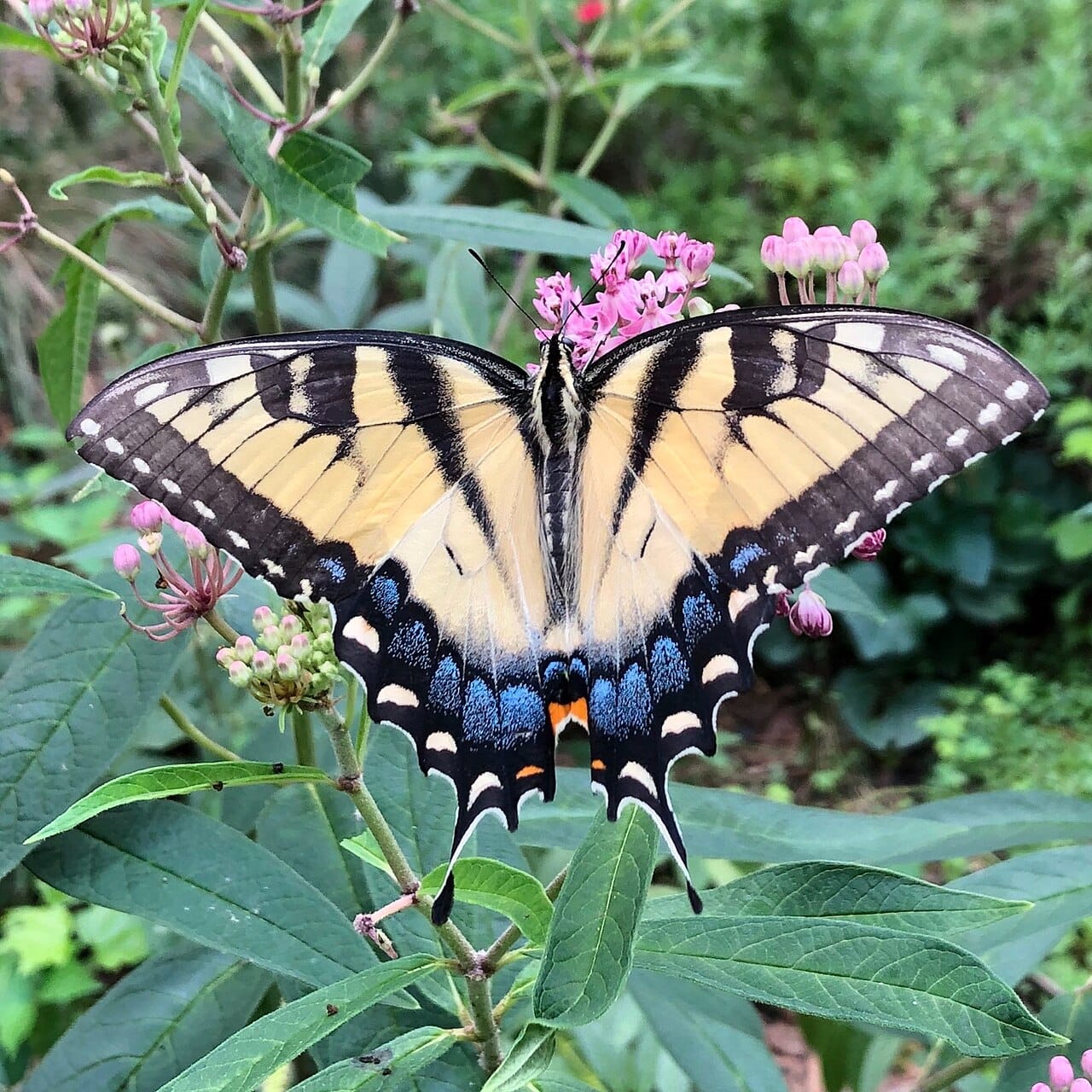
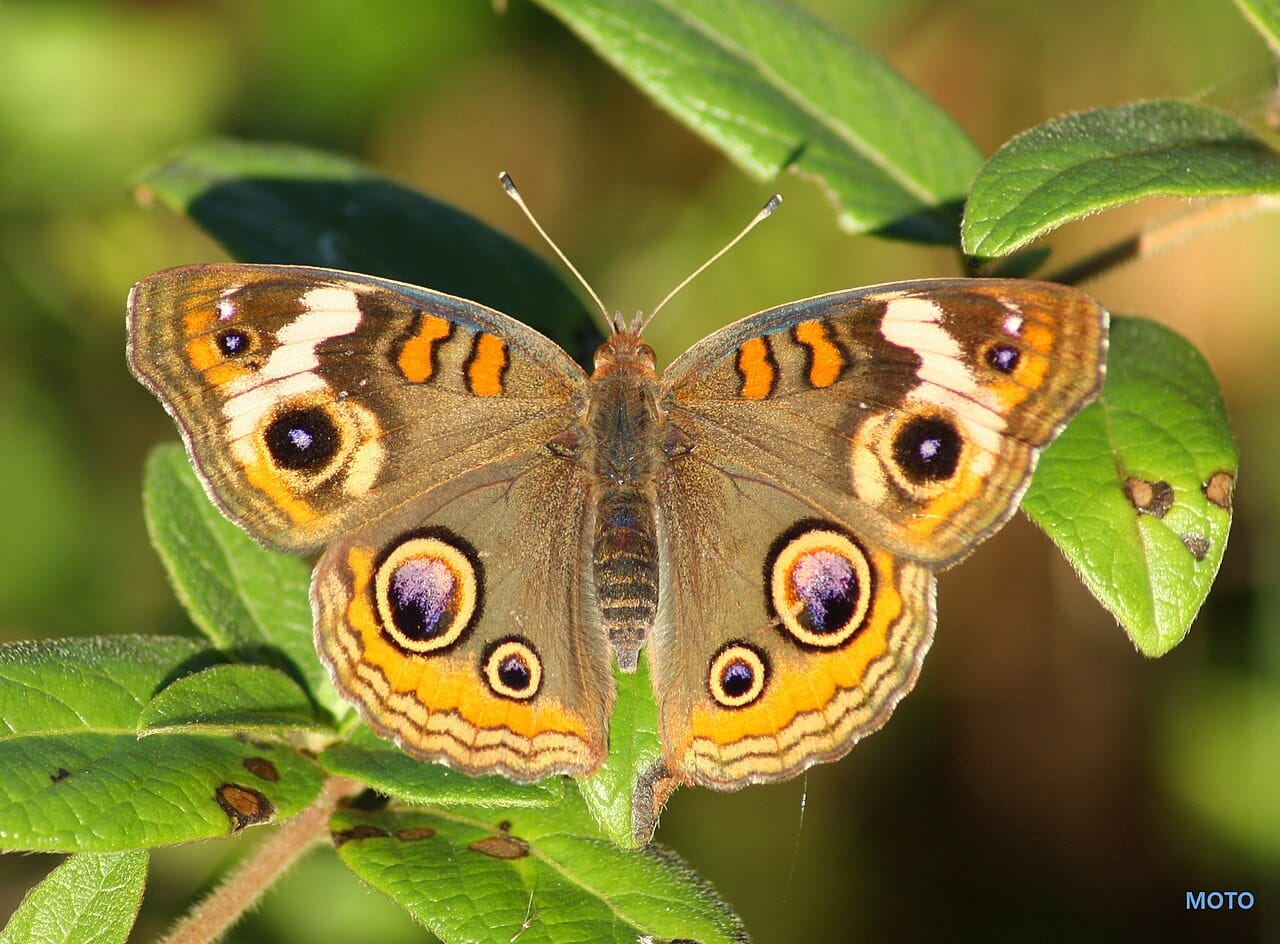
The beauties behind the Very Unidentifiable Butterfly: European peacock Quartl, CC BY-SA 3.0 | juniper hairstreak Judy Gallagher, CC BY 2.0 | red-spotted purple khteWisconsin | Eastern tiger swallowtail ch3chia, CC BY 4.0 | common buckeye John Flannery, CC BY-SA 2.0, via Wikimedia Commons
From my research, the colours and morphology can't be attributed to any single extant species. The Eastern tiger swallowtail (Papilio glaucus) has distinctively lobed or extended lower wings with some blue and yellow hues, while the common buckeye (Junonia coenia) has characteristic eyespots and has been selectively bred to create specimens with more eye-catching colouring - again, more recently than the book was published. The VHC's green tones and scalloped patterning may have been inspired by the juniper hairstreak's underwing (Callophrys gryneus) while the red-spotted purple (Limenitis arthemis astyanax) would be an equally vibrant muse, if only the illustrated wings were flipped vertically.
...either his wings are upside-down, or his whole body is upside-down in the picture and what everyone thinks is his head is actually his butt - Cassandra, concerned mother who paid attention in English class.
Unfortunately, one butterfly the grown up VHC really doesn't resemble is Epargyreus clarus. Chocolate brown with translucent golden spots on its upper wings; this subtle beauty is stout bodied, with a wingspan of up to 50mm, protruding eyes and hook-shaped antennae. It's one of the largest and most widespread skipper butterflies in North America, found from Canada to Mexico. The family is named for its particularly erratic flight movements and the silver-drop moniker relates to the irregular white patches visible when the butterfly closes its wings to rest.
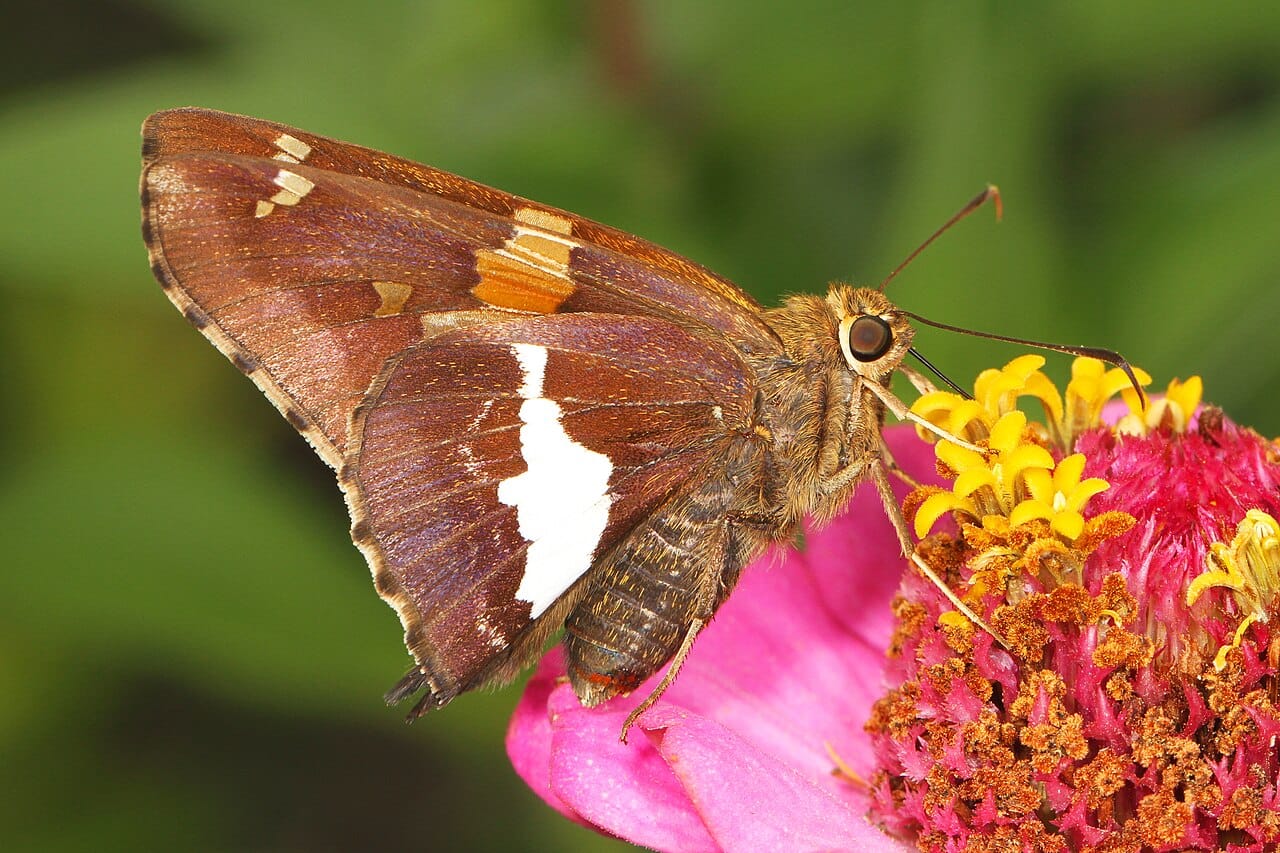
Like those wings, I'm going to give it a rest and close the pages of the Very Hungry Caterpillar now. Perhaps I'm no closer to a conclusion but I have hopefully provided some food for thought.

.jpg?ref=ellajdavies.com)


_002.jpg?ref=ellajdavies.com)


.jpg?ref=ellajdavies.com)
.jpg?ref=ellajdavies.com)

.jpg?ref=ellajdavies.com)
